Green Ports: How the World's Harbors Are Cutting Emissions
Ports sit where shipping's emissions meet city air — and that location has turned them from bystanders into drivers of maritime decarbonization. The world's leading harbors now compete on sustainability as visibly as on cranes and depth.
Shore power: turning ships off
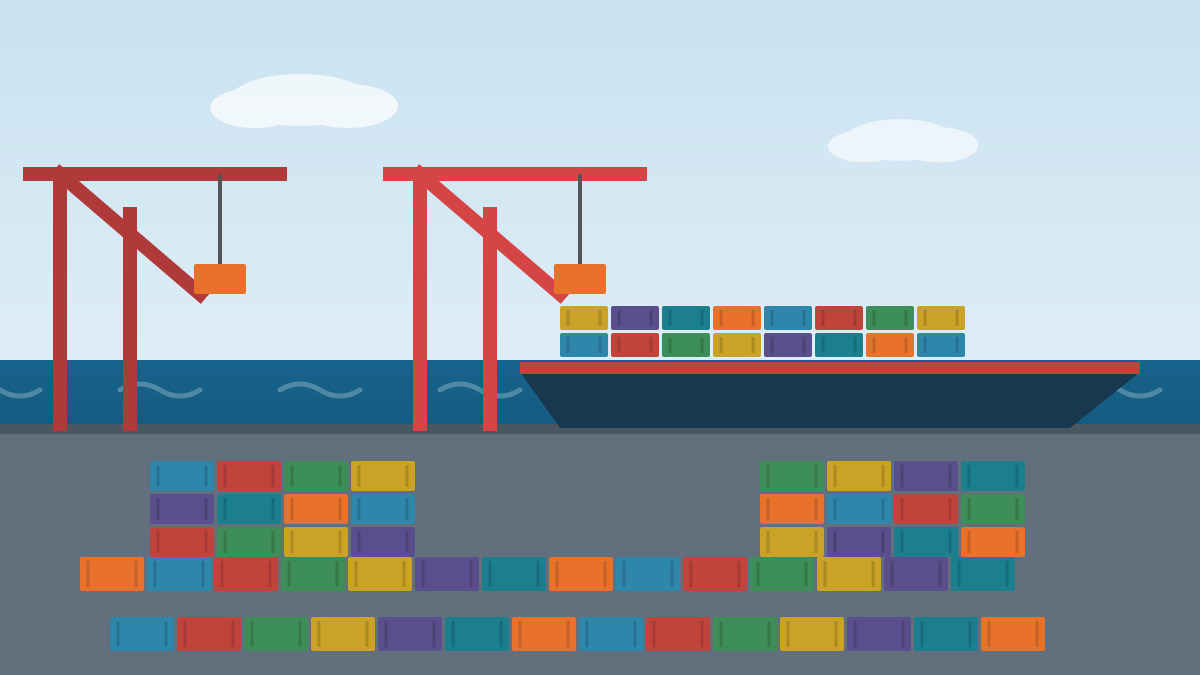
A ship at berth traditionally burns fuel in auxiliary engines just to keep its systems alive — a diesel generator idling beside a neighborhood for days. Shore power (cold ironing) replaces that with a grid connection: the ship plugs in, engines stop, and berth emissions fall toward zero. Regulation is forcing the pace — European rules will require major ports to offer shore power to container ships and cruise vessels by 2030, and California already mandates its use for several ship types. The engineering is substantial: a single large vessel draws electricity like a small town.
Electrifying the yard
Inside the terminal, the diesel era is closing. New gantry cranes are electric with energy-recovering drives that generate power while lowering containers; yard tractors and straddle carriers are shifting to batteries; automated vehicles charge between missions. Pair the fleet with renewable purchasing or on-site solar and wind, and a terminal's own operations can approach zero emissions — several flagship terminals already advertise exactly that.
The gate and beyond
A port's footprint extends past its fences: thousands of truck trips daily, plus rail and barge links. Green port programs attack this edge with cleaner-truck requirements and incentives, appointment systems that kill idling queues, and deliberate cargo shifts toward rail and inland waterways — the quiet policy of moving boxes with the least diesel per kilometer. Environmental discounts on port dues reward cleaner ships for calling, translating green performance directly into money.
Ports as fuel stations of the transition
The next role is bigger: supplying shipping's new fuels. Harbors from Singapore to Rotterdam are building bunkering capacity for LNG, methanol and, prospectively, ammonia, alongside green-corridor agreements — port pairs committing to zero-emission services between them. Ports are also natural hubs for offshore wind assembly and carbon-capture logistics, folding them deeper into the wider energy transition.
Why ports move first
Ports answer to neighbors, city governments and tightening air-quality rules; they own fixed infrastructure that electrifies more easily than a moving ship; and green credentials now win cargo, as shippers count supply-chain emissions. Self-interest and regulation point the same way — a rare alignment, and it shows in investment plans across every major harbor.
Conclusion
The green port is not a slogan but a checklist — plugs at berths, batteries in the yard, cleaner trucks at the gate, new fuels at the quay — being ticked, port by port, into the industry's new normal.
Sources & Further Reading
- UNCTAD — Review of Maritime Transport: unctad.org
- International Maritime Organization (IMO): imo.org
- World Shipping Council: worldshipping.org