Ports and Ships: The Invisible Infrastructure Behind Globalization
We often celebrate ships as the heroes of global trade — and they deserve it. But a ship without a port is just a floating warehouse. The true engine of globalization is the partnership between vessels at sea and the sophisticated infrastructure waiting on shore.
What Actually Happens in a Modern Port
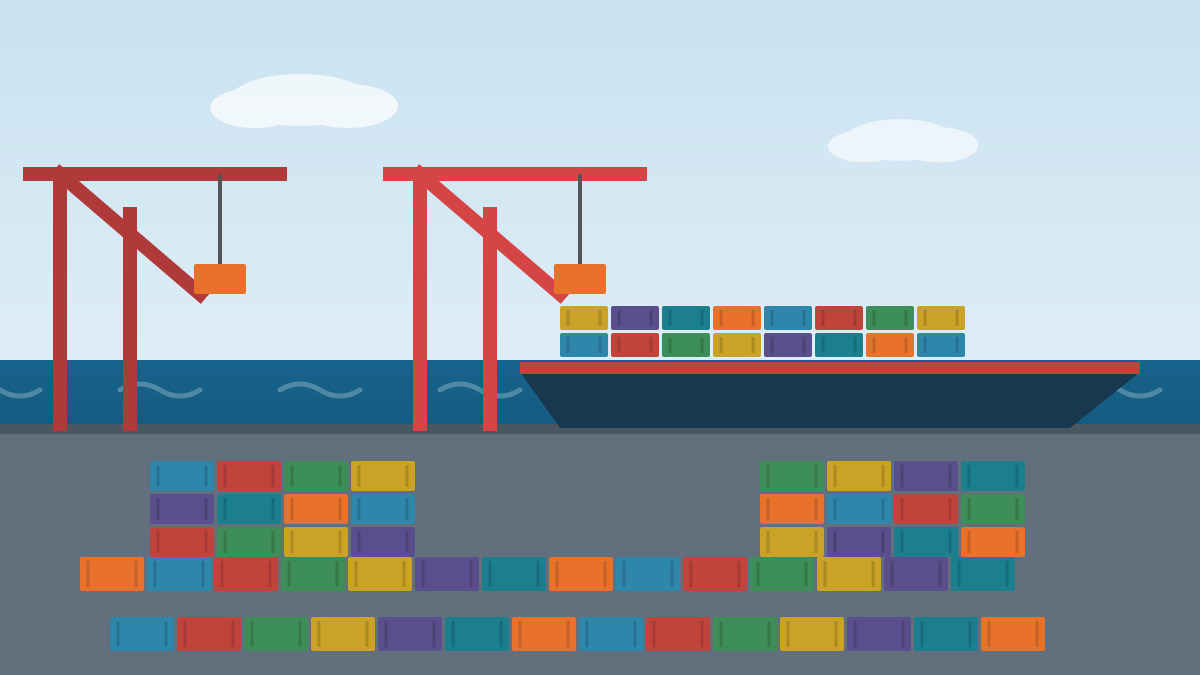
A large container port is one of the most precisely choreographed workplaces on Earth. When a ship arrives, a sequence begins that has been planned days in advance:
Berthing. Tugboats guide the massive vessel to its assigned dock, where mooring teams secure it.
Crane operations. Towering gantry cranes — some over 100 meters tall — begin lifting containers off the ship. A skilled operation can move a container every ninety seconds per crane.
Yard logistics. Automated or driver-operated vehicles carry each container to a precise location in the storage yard, tracked by computer systems that know the position of every single box.
Distribution. Trucks and trains collect the containers and carry them inland to warehouses, factories, and stores.
The world's most efficient ports can turn a giant ship around — fully unloaded and reloaded — in under 24 hours.
The Great Hubs of World Trade
A small group of mega-ports handles a remarkable share of global cargo. Ports in East Asia dominate the rankings by volume, with Shanghai and Singapore consistently among the busiest on the planet. Rotterdam serves as Europe's main gateway, while ports like Los Angeles and Santos anchor trade in the Americas.
These hubs function like airports for cargo: smaller "feeder" ships collect containers from regional ports and bring them to major hubs, where they transfer to giant vessels for intercontinental voyages.
Ports as Economic Engines
A major port transforms its entire region. It creates direct jobs — crane operators, logistics planners, customs officials, maintenance crews — and far more indirect ones in warehousing, trucking, and manufacturing. Industries deliberately locate near ports to cut transport costs, which is why many of the world's great industrial zones sit beside great harbors.
For developing economies, port investment is often a deliberate strategy: better port infrastructure lowers trade costs, attracts foreign investment, and connects local producers to global markets.
Technology Is Transforming the Docks
The stereotype of the crowded, chaotic dockside belongs to history. Today's leading ports are laboratories of automation:
- Remote-controlled and fully automated cranes operate around the clock.
- Artificial intelligence optimizes where each container is stored to minimize future moves.
- Digital documentation systems replace mountains of paperwork, speeding up customs clearance.
- Sensors track refrigerated containers in real time, protecting food and medicine shipments.
Some terminals now operate with almost no personnel physically on the ground, managed instead from control rooms.
The Ship–Port Relationship Shapes Globalization
Ships and ports evolve together. When shipping lines build larger vessels, ports must respond with deeper channels, taller cranes, and bigger yards. When ports become more efficient, shipping becomes cheaper — and cheaper shipping expands trade even further. This continuous cycle of mutual improvement has driven transport costs down for decades, pulling the world's economies closer together.
Conclusion
Globalization is often described in abstract terms — markets, trade agreements, capital flows. But it has a physical body: steel ships crossing oceans and concrete ports receiving them. Together, they form the invisible infrastructure that delivers the modern world to our doorsteps, container by container, every single day.
Frequently Asked Questions
What is the busiest port in the world?
Shanghai has held the top position for years, handling tens of millions of TEUs annually, with Singapore leading as the world's great transshipment hub. Rankings by tonnage rather than containers can differ.
What is transshipment?
Transshipment means transferring containers from one ship to another at an intermediate hub rather than moving them inland. Hubs like Singapore route boxes between large ocean vessels and regional feeder ships.
How fast can a port unload a mega-ship?
With several cranes working simultaneously, top terminals complete thousands of crane moves and turn a large vessel around in roughly a day. Each crane can cycle a container in well under two minutes.
Are port jobs disappearing because of automation?
The mix is changing more than the total. Automated terminals need fewer traditional driving roles but more remote operators, maintenance technicians and IT specialists, and transitions are typically negotiated with port unions.
Sources & Further Reading
- UNCTAD — Review of Maritime Transport: unctad.org
- International Maritime Organization (IMO): imo.org
- World Shipping Council: worldshipping.org