How a Container Terminal Works: From Ship Arrival to Truck Gate
From a distance, a container terminal looks like chaos in primary colors: stacks of boxes, swarming machines, ships the size of buildings. In reality it is one of the most tightly choreographed environments in the global economy — a factory whose product is movement. Here is what actually happens, step by step.
Before the ship arrives
The operation begins days out. The vessel's arrival is scheduled into a berth window; the shipping line transmits lists of every container to discharge and load; and planners build a stowage plan balancing weight, stability, port rotation, and special cargo — refrigerated boxes need power points, dangerous goods need separation. Yard positions are pre-assigned so each incoming box has a destination before it exists on the quay.
Arrival and berthing
A marine pilot boards to guide the ship through the approach; tugboats nudge tens of thousands of tons precisely against the fenders; mooring teams secure lines. Within minutes of "all fast," the shore cranes are moving — because every hour at berth is measured and costed.
The quay: cranes at work
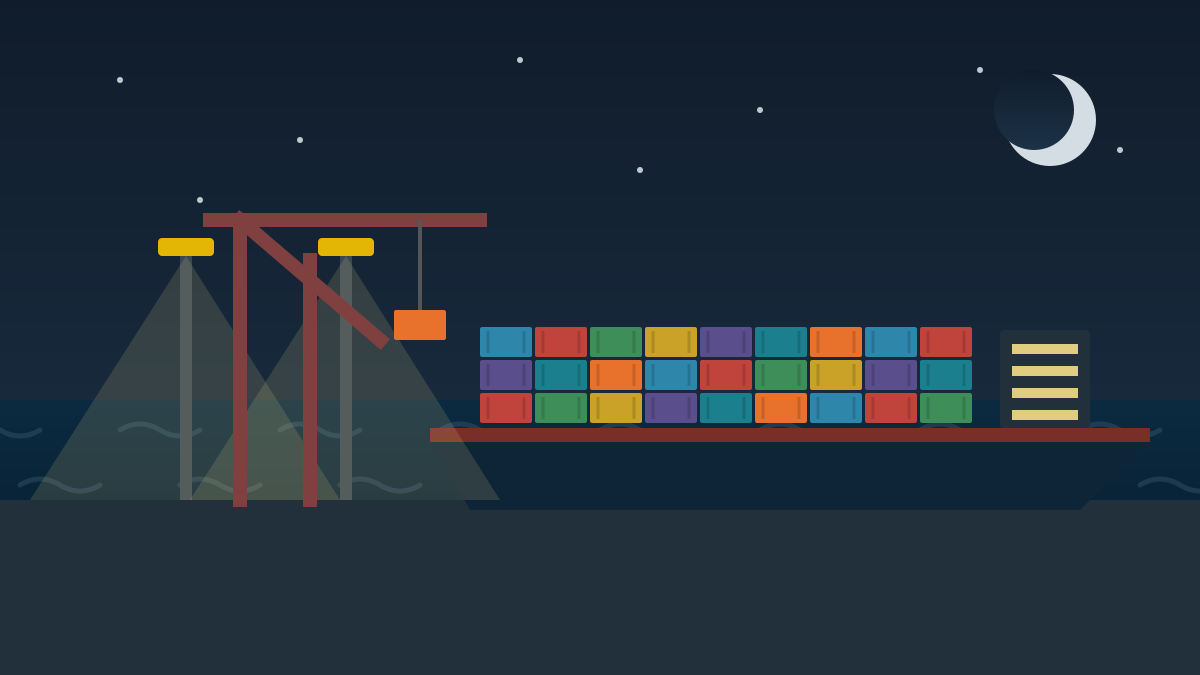
Ship-to-shore gantry cranes tower over the vessel, their booms reaching across today's widest ships. An operator — increasingly working remotely from an office with joysticks and screens — locks the spreader onto a container's corner castings, lifts, and lands it on a waiting vehicle in a cycle of well under two minutes. Multiple cranes work one ship simultaneously; a large call can involve thousands of moves, and twin-lift spreaders handling two twenty-foot boxes at once push productivity further.
The yard: a live database in steel
Horizontal transport — terminal tractors, straddle carriers, or automated guided vehicles, depending on the terminal — shuttles boxes between quay and yard blocks, where stacking cranes slot them into towers several containers high. The terminal operating system tracks every box's exact slot and choreographs restacking so that each container surfaces close to the moment it is needed. Reefer racks hum with plugged-in refrigerated units, monitored around the clock.
Gates, rail, and the paperwork layer
Landside, trucks flow through automated gates where cameras read container and plate numbers and drivers are directed to precise pickup slots; on-dock rail terminals load trains for the deep hinterland. In parallel runs the invisible layer: customs clearance, cargo releases, and inspections. A box may be physically ready yet legally not — port community systems exist to make the data move as smoothly as the steel.
The automated frontier
Leading terminals now run yards with no drivers at all: automated stacking cranes, battery-powered AGVs, remote quay-crane supervision, and AI continuously re-optimizing every position. Automation brings relentless consistency and safety — machines and people are separated by design — while shifting human work toward control rooms and maintenance. The world's benchmark facilities turn a mega-ship around, thousands of moves and all, in roughly a day.
Why terminal performance matters to everyone
Terminals are the metronome of supply chains. When they flow, nobody notices; when they congest, ships queue at anchor, containers miss connections, and delays ripple into factories and store shelves worldwide — as recent crunch years demonstrated. The productivity of a few hundred hectares of asphalt quietly conditions prices everywhere.
Conclusion
A container terminal is globalization's stage crew: invisible when perfect, indispensable always. The next delivery that arrives exactly on time passed, somewhere, through this precise dance of cranes, algorithms, and steel.
Sources & Further Reading
- UNCTAD — Review of Maritime Transport: unctad.org
- International Maritime Organization (IMO): imo.org
- World Shipping Council: worldshipping.org