Port Jobs: The Careers That Keep Global Trade Moving
Every port city knows the silhouette of its cranes, but few people can name the jobs beneath them. A major port is a labor market of its own — thousands of direct roles and many more in the logistics belt around it. For anyone drawn to work with global reach and tangible results, ports offer one of the economy's most underrated career landscapes.
Operations: the visible core
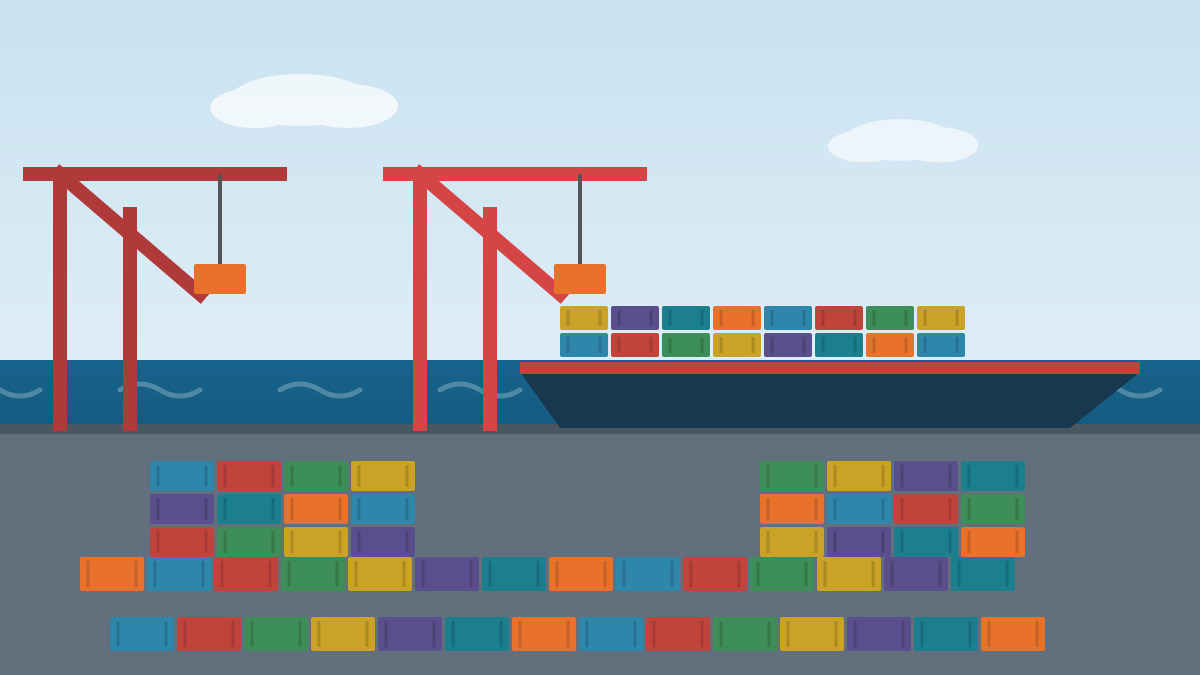
Crane operators are the port's precision athletes, landing multi-ton boxes within centimeters — today often from remote-operation rooms where screens and joysticks replace the cab high above the quay. Equipment drivers run terminal tractors, straddle carriers, and reach stackers; lashers and stevedores secure containers aboard; foremen and shift supervisors orchestrate gangs and machines against the clock. These roles typically combine certified training with well-organized shift systems, and in many countries rank among the better-paid skilled manual professions.
Marine services: where ships meet land
Maritime pilots — experienced mariners with deep local knowledge — board arriving vessels to guide them through channels and turns; it is one of the most demanding and respected careers afloat, usually reached after years as a ship's officer. Around them work tug crews, mooring gangs, VTS operators directing traffic from control towers like air traffic controllers of the sea, and harbor masters holding overall authority over marine safety in the port.
Planning and the digital port
Behind every smooth vessel call sit ship and yard planners solving three-dimensional puzzles of weight, stability, and sequence; berth planners fitting arrivals into scarce quay time; and analysts tuning the terminal operating system. As automation spreads, ports increasingly hire software engineers, data scientists, and automation technicians — careers that did not exist on the waterfront a generation ago and now shape its productivity.
Engineering and maintenance
Cranes, gates, reefer racks, and fleets of vehicles demand constant care. Mechanical and electrical technicians, civil engineers maintaining quays and pavements, and project engineers delivering expansions keep the physical port alive. Electrification and shore-power projects are adding a new generation of energy-focused roles.
The commercial and regulatory layer
Ports run on documents as much as diesel. Customs brokers and compliance specialists clear cargo across borders; freight forwarders assemble door-to-door transport; shipping line and terminal commercial teams negotiate services; safety, security, and environmental officers enforce the rules that keep a hazardous industrial site orderly and increasingly green.
How people get in — and move up
Entry paths are diverse: technical and logistics programs, maritime academies for marine careers, apprenticeships for equipment and trades, and graduate routes into planning and management. Career mobility is a genuine feature — from equipment to supervision, from ship's officer to pilot or VTS, from planner to terminal manager. Because terminal operators and shipping lines are global companies, port careers can also travel internationally.
A workforce in transition
Automation is reshaping rather than erasing port work: fewer traditional driving roles at fully automated terminals, more remote operation, maintenance, and IT. The transition is often negotiated with strong port unions, historically among labor's most organized. Meanwhile the industry's decarbonization push is creating roles that blend logistics with energy — the port electrician may be this decade's emblematic new hire.
Conclusion
Ports offer what much modern work lacks: visible results at planetary scale. Whether your tools are joysticks, algorithms, regulations, or wrenches, there is a version of the waterfront that needs them — and the world's cargo will keep arriving either way.
Sources & Further Reading
- UNCTAD — Review of Maritime Transport: unctad.org
- International Maritime Organization (IMO): imo.org
- World Shipping Council: worldshipping.org